


New 2026 NEX exam questions Welcome to download the newest TestPassed NEX PDF dumps (152 Q&As)
P.S. Free 2026 Nursing Education Program NEX dumps are available on Google Drive shared by TestPassed
NEW QUESTION # 15
Word Knowledge
The word"implement"most nearly means:
- A. Avoid
- B. Carry out
- C. Delay
- D. Ignore
Answer: B
Explanation:
To implement means to put a plan or decision into action. Option B is the correct synonym. This word is frequently used in healthcare policies and procedures.
======
NEW QUESTION # 16
At a certain hospital, onlyof all births are twins. What percent is that?
- A. 25%
- B. 4%
- C. 0.4%
- D. 1.25%
Answer: B
Explanation:
This problem requires converting a fraction into a percent, a frequent NEX skill. Begin by convertinginto a decimal. Divide 1 by 25:
1 ÷ 25 = 0.04.
Next, convert the decimal to a percent by multiplying by 100:
0.04 × 100 = 4%.
Thus, the correct answer is B. Option A (0.4%) results from moving the decimal only one place instead of two. Option C (1.25%) corresponds to, and option D (25%) equals. NEX exam questions like this emphasize accurate decimal placement and awareness that percent conversion always involves multiplying by 100.
NEW QUESTION # 17
Reading Comprehension
Passage:
Sleep plays a critical role in memory consolidation. During certain stages of sleep, the brain processes and stores information learned throughout the day. Lack of sleep has been linked to impaired judgment, slower reaction times, and decreased academic performance.
Which conclusion is best supported by the passage?
- A. Sleep is only important for physical health
- B. Academic success depends solely on sleep duration
- C. Memory formation is affected by sleep
- D. People can function normally without sleep
Answer: C
Explanation:
The correct answer must be directly supported by the information in the passage. The passage clearly explains that sleep helps the brain process and store information, which is essential for memory consolidation. It also states that lack of sleep negatively affects cognitive abilities such as judgment and reaction time. Therefore, the conclusion that memory formation is affected by sleep is well supported. Option A is incorrect because the passage emphasizes mental and cognitive effects, not just physical health. Option C is directly contradicted by the passage's mention of impaired functioning due to lack of sleep. Option D exaggerates the information; while sleep affects academic performance, the passage does not claim it is the sole factor. On the NEX exam, supported-conclusion questions require selecting an answer that is neither too extreme nor unsupported by the passage.
======
NEW QUESTION # 18
Which structure works to prevent reflux of gastric contents by contracting and relaxing?
- A. Angle of His
- B. Upper esophageal sphincter
- C. Esophageal muscularis
- D. Lower esophageal sphincter
Answer: D
Explanation:
The lower esophageal sphincter (LES) is a ring of smooth muscle located at the junction between the esophagus and the stomach. Its primary function is to prevent gastric contents, including acid, from flowing back into the esophagus. The LES contracts to keep the stomach contents contained and relaxes to allow food to enter the stomach during swallowing. Dysfunction of the LES can lead to gastroesophageal reflux disease (GERD). The esophageal muscularis helps move food, the upper esophageal sphincter controls entry into the esophagus, and the angle of His is an anatomical feature rather than a muscular valve. The NEX Science exam frequently tests digestive system physiology and reflux prevention mechanisms.
NEW QUESTION # 19
Word Knowledge
The word"stable"most nearly means:
- A. Steady
- B. Unpredictable
- C. Fragile
- D. Changing
Answer: A
Explanation:
Stable describes something that is steady, consistent, or not changing. Option C best reflects this meaning.
NEX exams frequently use stability-related vocabulary in clinical scenarios.
NEW QUESTION # 20
Word Knowledge
The word"assist"most nearly means:
- A. Help
- B. Delay
- C. Ignore
- D. Prevent
Answer: A
Explanation:
"Assist" means to help or support. Option B is the correct synonym. The remaining options describe actions that oppose assistance. NEX verbal questions frequently use healthcare-related vocabulary like assist, administer, and support.
======
NEW QUESTION # 21
Word Knowledge
The word"contribute"most nearly means:
- A. Ignore
- B. Add to
- C. Remove
- D. Prevent
Answer: B
Explanation:
To contribute means to add to or help bring about a result. Option B is the correct synonym. The other options describe the opposite action. NEX vocabulary often includes cause-and-effect language.
======
NEW QUESTION # 22
Review the image of the human digestive tract shown below.
What is the principal process occurring in the region labeled 4?
- A. Absorption of water
- B. Synthesis of triglycerides
- C. Hydrolysis of proteins
- D. Assimilation of fatty acids
Answer: A
Explanation:
Region 4 in the diagram corresponds to the large intestine. The primary function of the large intestine is the absorption of water and electrolytes from undigested food material. This process helps concentrate waste material into feces before elimination. Assimilation of fatty acids and synthesis of triglycerides occur primarily in the small intestine, especially within intestinal epithelial cells. Hydrolysis of proteins occurs mainly in the stomach and small intestine through the action of enzymes such as pepsin and proteases. The NEX Science exam often tests digestive system function by matching specific organs to their primary processes. Since water absorption is the defining function of the large intestine, option B is correct.
======
NEW QUESTION # 23
Word Knowledge
The word"abundant"most nearly means:
- A. Scarce
- B. Limited
- C. Plentiful
- D. Fragile
Answer: C
Explanation:
"Abundant" means existing in large quantities or more than enough. Option B, "plentiful," is the closest synonym. Scarce and limited are opposites, and fragile refers to being easily broken. NEX word knowledge questions focus on synonyms used in common academic and healthcare contexts.
======
NEW QUESTION # 24
Word Knowledge
The word"reluctant"most nearly means:
- A. Hesitant
- B. Prepared
- C. Willing
- D. Eager
Answer: A
Explanation:
"Reluctant" describes someone who is unwilling or hesitant to act. Option C best matches this meaning. The other options suggest eagerness or readiness, which are opposites. Context clues on the NEX often rely on emotional tone.
======
NEW QUESTION # 25
Four students were comparing their test scores on an exam. All questions were worth the same number of points.
* Student A: 19 out of 26
* Student B: 75 out of 100
* Student C: 71%
* Student D: 0.719
Which student scored the highest on the exam?
- A. Student C
- B. Student A
- C. Student B
- D. Student D
Answer: B
Explanation:
This problem requires comparing fractions, percentages, and decimals by converting them to the same form.
Convert each score to a decimal. Student A: 19 ÷ 26 # 0.731. Student B: 75 ÷ 100 = 0.75. Student C: 71% =
0.71. Student D: already given as 0.719. Comparing these values, 0.75 is the highest. Therefore, Student B scored the highest. Option D (0.719) is close but still lower than 0.75. The NEX frequently tests comparison skills across different numerical formats, so converting everything to decimals is the safest approach.
======
NEW QUESTION # 26
Reading Comprehension
Passage:
Preventive screenings can identify health problems before symptoms develop. Early detection often leads to more effective treatment and better outcomes.
What is the benefit of preventive screenings?
- A. Avoiding medical treatment
- B. Identifying problems early
- C. Reducing healthcare visits
- D. Eliminating disease entirely
Answer: B
Explanation:
The passage emphasizes that preventive screenings allow health problems to be identified before symptoms appear. Option C accurately reflects this benefit. The other options are either incorrect or exaggerated. On the NEX exam, benefit questions often focus on early intervention and prevention themes.
======
NEW QUESTION # 27
A rectangle's length and width are 4 centimeters (cm) and 6 cm. What is
1
2
2
1
the area of this rectangle?
(Given Area = length × width.)
- A. 20 cm²
- B. 10 cm²
- C. 24 cm²
- D. 12 cm²
Answer: D
Explanation:
This problem tests area formulas and fraction application. First calculate the full area of the rectangle using the given formula: Area = length × width. Multiply 4 cm by 6 cm to get 24 cm². The question asks for one- half of the area, not the total area. Divide 24 by 2: 24 ÷ 2 = 12 cm². Therefore, option B is correct. Option C is the full area, not half. Option A results from subtracting instead of dividing. Option D represents an incorrect partial calculation. NEX geometry questions often require careful reading to determine whether the question asks for total area or a fraction of it.
NEW QUESTION # 28
In the human male, which of these structures produces sperm cells?
- A. Cowper's glands
- B. Epididymis
- C. Prostate gland
- D. Testes
Answer: D
Explanation:
Sperm cells are produced in thetestes, specifically within tightly coiled structures called seminiferous tubules.
The process of sperm production is known as spermatogenesis and requires hormones such as testosterone.
Cowper's glands and the prostate gland do not produce sperm; instead, they secrete fluids that contribute to semen and help protect and nourish sperm cells. The epididymis is responsible for sperm maturation and storage but does not produce sperm. The NEX Science exam often tests reproductive anatomy by asking students to distinguish between sperm production, maturation, and transport. Understanding the specific role of each male reproductive structure is essential. Since only the testes are responsible for the formation of sperm cells, option C is the correct answer.
NEW QUESTION # 29
Which microorganism is considered harmful or causes disease?
- A. Immune factor
- B. Pathogen
- C. Vector
- D. Enzyme
Answer: B
Explanation:
A pathogen is any microorganism that causes disease in a host. Pathogens include bacteria, viruses, fungi, and parasites. Enzymes are proteins that speed up chemical reactions and are not microorganisms. Immune factors are components of the immune system that protect against disease. A vector is an organism, such as a mosquito or tick, that transmits pathogens but does not itself cause disease. The NEX Science exam commonly assesses understanding of infectious disease terminology and distinctions between disease-causing organisms and disease carriers. Recognizing pathogens as the direct cause of illness is a key concept in microbiology and public health.
======
NEW QUESTION # 30
Which of the following bones form the ball-and-socket joint of the upper extremity?
- A. Humerus, clavicle
- B. Scapula, humerus
- C. Ribs, humerus
- D. Scapula, clavicle
Answer: B
Explanation:
The ball-and-socket joint of the upper extremity is the shoulder joint. This joint is formed by the head of the humerus (the ball) fitting into the glenoid cavity of the scapula (the socket). This structure allows for a wide range of motion, including flexion, extension, abduction, adduction, and rotation. The ribs do not participate in this joint, and the clavicle connects the scapula to the sternum but does not form the ball-and-socket articulation. Understanding joint structure and function is important for anatomy questions on the NEX Science exam. The shoulder joint's design allows greater mobility than stability, which explains why shoulder dislocations are relatively common.
======
NEW QUESTION # 31
You are staining bacterial samples for identification and viewing them under a microscope.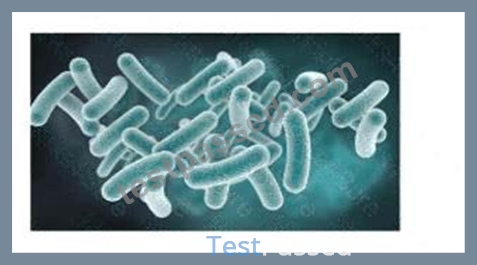
Which bacterial shape do you observe in the sample?
- A. Cocci
- B. Bacilli
- C. Spirochetes
- D. Vibrios
Answer: B
Explanation:
This question tests knowledge of bacterial morphology, which is commonly assessed on the NEX Science exam. Bacteria are often classified based on their shape, which helps in identification and diagnosis. The image shows elongated, rod-shaped bacteria. This shape is characteristic ofbacilli. Bacilli are cylindrical or rod-like and are commonly found in many bacterial species, includingEscherichia coliandBacillus anthracis.
Cocci are spherical in shape, spirochetes are long and spiral-shaped, and vibrios have a curved, comma-like appearance. None of these shapes match the straight rod-like structures shown in the image. Identifying bacterial shape is an important first step in microbiology before further tests such as Gram staining or biochemical analysis are performed. The NEX exam frequently uses images or descriptions to assess whether students can correctly distinguish between cocci, bacilli, spirilla/spirochetes, and vibrios based on visual characteristics. Recognizing bacilli as rod-shaped bacteria is a key foundational concept.
NEW QUESTION # 32
What is the term for small, clear vessels found near blood capillaries and responsible for draining excess interstitial fluid not reabsorbed into the blood?
- A. Arterioles
- B. Lymphatic capillaries
- C. Immune capillaries
- D. Venules
Answer: B
Explanation:
Lymphatic capillaries are small, thin-walled vessels that collect excess interstitial fluid that is not reabsorbed by blood capillaries. This fluid, now called lymph, is transported through the lymphatic system and eventually returned to the bloodstream. This process helps maintain fluid balance and prevents tissue swelling. Arterioles and venules are part of the blood vascular system, not the lymphatic system. Immune capillaries are not a recognized anatomical structure. The NEX Science exam often tests the relationship between the circulatory and lymphatic systems, emphasizing the role of lymphatic capillaries in fluid regulation and immune defense.
======
NEW QUESTION # 33
Where does saltatory conduction occur?
- A. Unmyelinated axons
- B. Muscle cells
- C. Dendrites
- D. Myelinated axons
Answer: D
Explanation:
Saltatory conduction is the rapid transmission of nerve impulses alongmyelinated axons. In myelinated neurons, the axon is covered with a fatty insulating layer called myelin, which is interrupted at gaps known as nodes of Ranvier. During saltatory conduction, the electrical impulse "jumps" from one node to the next, greatly increasing the speed of signal transmission. Unmyelinated axons conduct impulses more slowly because the signal must travel continuously along the entire membrane. Dendrites receive signals rather than transmit them over long distances, and muscle cells do not conduct nerve impulses in this manner. The NEX Science exam commonly tests nervous system physiology, particularly mechanisms that improve conduction speed, making myelinated axons the correct answer.
======
NEW QUESTION # 34
Reading Comprehension
Passage:
Regular physical activity improves cardiovascular health by strengthening the heart and improving circulation. Exercise can also help manage stress, improve mood, and reduce the risk of chronic disease.
Which benefit of exercise is mentioned in the passage?
- A. Faster digestion
- B. Improved mood
- C. Enhanced vision
- D. Increased appetite
Answer: B
Explanation:
The passage lists several benefits of exercise, including improved cardiovascular health, stress management, improved mood, and reduced chronic disease risk. Option B is explicitly mentioned, making it the correct answer. The other options introduce benefits not discussed in the passage. On the NEX exam, detail-based questions require careful reading to identify information that is directly stated rather than inferred. Choosing only what is explicitly mentioned is key.
======
NEW QUESTION # 35
......
NEX exam questions from TestPassed dumps: https://www.testpassed.com/NEX-still-valid-exam.html (152 Q&As)
Free 2026 Nursing Education Program NEX dumps are available on Google Drive shared by TestPassed: https://drive.google.com/open?id=1kIvVR2K5JHvlPO9Fjv_9MvDlPuaWs-fJ